




What we need to learn
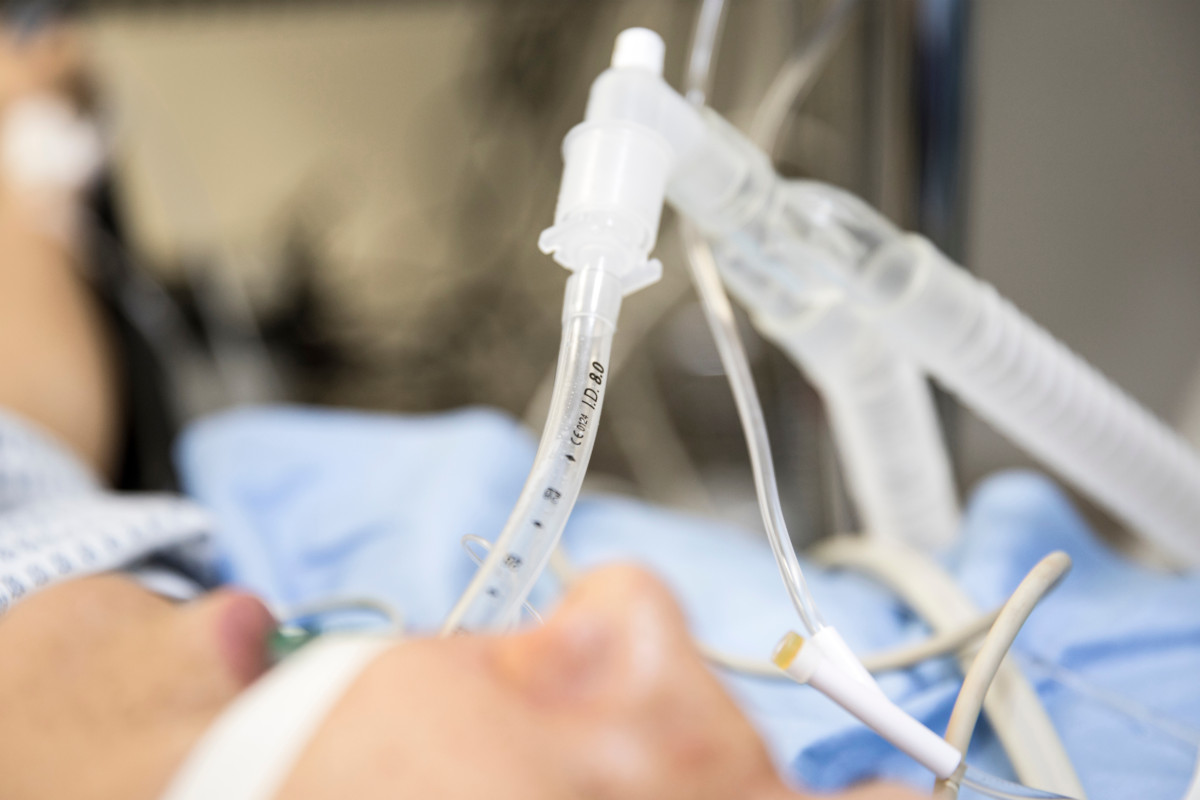
To safely connect a patient to a breathing machine, doctors place a breathing tube through the mouth, past the vocal cords, and into the windpipe. To do this, they use a tool called a “video laryngoscope” to see the vocal cords and guide the breathing tube into place.
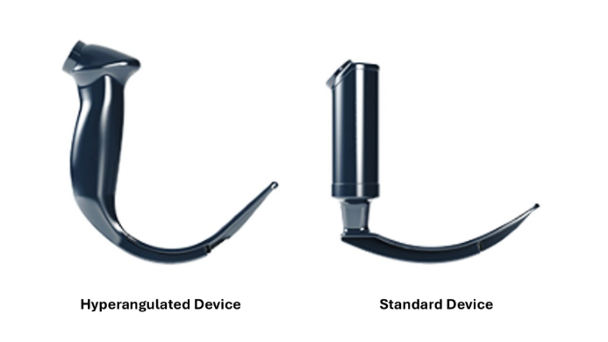
There are two common types of “video laryngoscopes”:
- Hyperangulated: a more curved design that makes it easy to see the vocal cords but creates a less direct path for placement of the breathing tube.
- Standard geometry: a less curved design that requires more manipulation (movement of the jaw) to see the vocal cords but creates a more direct path for placement of the breathing tube.
What we are doing
This research study is called the “Hyperangulated versus Standard Geometry Laryngoscope Blade Trial” (ANGLE). The goal of the study is to learn whether a hyperangulated or standard video device is better, and for which types of patients, for placing the breathing tube safely on the first try. Placing the breathing tube on the first try is good because the quicker the breathing tube is placed, the lower the chances that the patient experiences low oxygen levels, low blood pressure levels, or other complications.
This research will take place in emergency departments (EDs) and intensive care units (ICUs), which care for all different types of patients.
Participating in this study will not impact the quality of care patients receive. For each patient:
- If doctors think the hyperangulated device is best for a patient, they will use that device, and the patient will not take part in the study.
- If doctors think the standard device is best for a patient, they will use that device, and the patient will not take part in the study.
- If the doctors think both devices are equally safe and effective for the patient, the patient will be enrolled in the ANGLE study and which type of video laryngoscope is used to place the breathing tube will be randomly chosen by the ANGLE study.
The study team will confidentially review the patient’s medical record as part of the research.
Consent for Research during Emergency Care
Placing seriously ill adults on a breathing machine is an emergency procedure. There is often no time for doctors to discuss the risks and benefits of the procedure. Patients are often unconscious or too sick to make decisions. So, doctors go ahead with life-saving care without the patient’s okay (consent).
Important research to find the best emergency care, like the ANGLE study, can sometimes be done without getting patients’ okay (consent) ahead of time through a process called “Waiver of informed consent”. Studies done with waiver of informed consent are reviewed by researchers, doctors, and an independent ethics committee. Patients or their family members receive information explaining the study and with the contact information of the research team to ask any questions.
Questions?
If you have any questions or concerns about this study, you may contact the Principal Investigator, Dr. Stephanie DeMasi at stephanie.demasi@vumc.org or (615)-208-6139. If you have questions about your rights as a research participant, or concerns or complaints about the research, you may also contact the Vanderbilt Human Research Protections Program at (615)- 322-2918.
FAQs
What is a breathing machine?
Some seriously ill patients in the hospital need help to breathe. In this situation, a breathing machine – also known as a “mechanical ventilator” – is used to breathe for the patient while they heal. A breathing machine helps move air in and out of the lungs to maintain proper levels of oxygen in the blood. To use a breathing machine, the doctors and nurses insert a tube through the mouth to reach the lungs. The procedure for inserting a tube into the mouth to reach the lungs is called “intubation”.
What are the risks of each video device type?
During intubation in the ED or ICU patients are at risk for problems like low oxygen levels, low blood pressure, heart rhythm problems, or even death. All of these risks are present no matter which type of video laryngoscope is used.
Both hyperangulated and standard video laryngoscopes are used to place breathing tubes every day across the world. As far as we know today, both are equally safe and effective. It is possible that this study could find that the curved (hyperangulated) device or the less curved (standard) device makes it easier to place the breathing tube and improves outcomes. The goal of the ANGLE study is to determine if video device type affects these risks.
Who is eligible for the ANGLE study?
Patients can only participate if they are undergoing breathing tube placement at a hospital participating in the study. They cannot volunteer at any other time.
- Adults who are receiving treatment in a participating emergency room or intensive care unit (ICU) whose doctors have determined that they need a breathing tube may be eligible for this study.
- Patients are eligible only if their doctors and nurses think that using either a hyperangulated or standard video laryngoscope to place a breathing tube would be consistent with optimal care for them.
- Patients can only participate if they are undergoing breathing tube placement at a hospital participating in the study. They cannot volunteer at any other time.