



What we need to learn
Seriously ill patients sometimes need a breathing machine to help them breathe. Doctors or respiratory therapists select settings on the breathing machine that determine how the patient receives each breath – referred to as the “mode”. Three modes are common: volume control, pressure control, and adaptive pressure control. All 3 are considered safe and effective, but it is not known if one breathing machine mode is better than the others.
What we are doing
This research study is called the “Mode of Ventilation During Critical Illness at Multiple Center” (MODEM) and is funded by the National Heart Lung and Blood Institute (NHLBI). Our goal is to compare three different modes used on breathing machines to understand if one mode is better for helping patients recover. For all patients on a breathing machine in this ICU:
- When the healthcare team feels they know which mode is best for a patient, they use that mode.
- When the team does not know which mode would be best, doctors and respiratory therapists use the mode assigned to the ICU for that month – a computer has assigned the ICU to use a mode for each month randomly (which means each patient in the ICU has a fair and equal chance of receiving any of the three modes).
- When you or your loved one is on the breathing machine, the study will collect data about the person on the breathing machine, their care and their condition. The study will continue to follow them until they are discharged to collect data about their recovery.
All three modes are commonly used to care for patients on a breathing machine. Current guidelines do not recommend using one more than the others.
Participating in this study will not impact the quality of care patients receive. For each patient:
- All three ventilator modes were commonly used in the care of patients prior to the start of the trial.
- During the trial, all patients admitted to the study ICU in a given month will receive the same ventilator mode, determined by the trial. The goals for the safe size and pressure of breaths from the breathing machine will be the same
- If at any time clinicians feel that a different mode is optimal for their care, the doctors or respiratory therapists can change to use that mode.
The study team will
- Check in with clinical teams during the study to ensure they feel comfortable using the mode assigned by the study for each of their patients.
- Confidentially review the medical record of all eligible patients
Questions
If you have any questions or concerns about this study, you may contact the Principal Investigator, Dr. Kevin Seitz at kevin.seitz@vumc.org or (615) 936-9329. If you have questions about your rights as a research participant, or concerns or complaints about the research, you may also contact the Vanderbilt Human Research Protections Program at (615)- 322-2918.
Participating Sites
- Johns Hopkins Hospital
- Rush University Medical Center
- Vanderbilt Health
- Wake Forest Atrium Health
Frequently Asked Questions
What is a breathing machine?
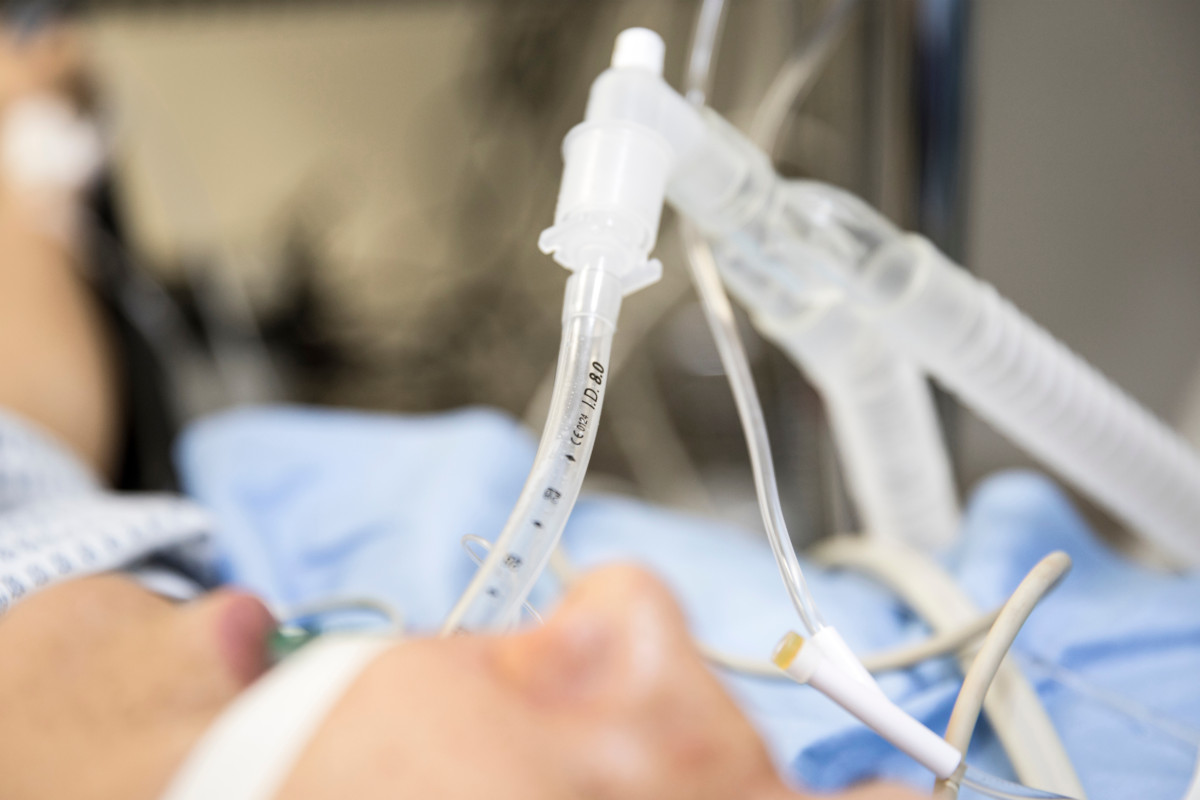
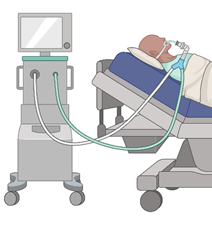
Some seriously ill patients in the hospital need help breathing. In this situation, a breathing machine – also known as a “mechanical ventilator” – is used to breathe for the patient while they heal. A breathing machine helps move air in and out of the lungs to maintain proper levels of oxygen and carbon dioxide in the blood. To use a breathing machine, the doctors and nurses insert a tube through the mouth to reach the lungs.
What are the risks of each ventilator mode?
The three modes in this study (volume control, pressure control, and adaptive pressure control) are used every day across the world. As far as we know today, both all 3 modes are equally safe and effective. However, it is possible that using volume control could reduce the risk of large breaths that injure the lungs, while using pressure control could reduce the risk of high pressure that injure the lungs, and using adaptive pressure control could reduce the risk of both large breaths and high pressures. The goal of the MODEM trial is to determine if mode affects those risks and affects how patients recover from their illness to get off the breathing machine faster.
Who is eligible for the MODEM study?
Adults who are receiving treatment in an intensive care unit (ICU) who are receiving support from a breathing machine through a breathing tube. Patients can only participate if they are in an ICU at a hospital participating in the study. They cannot volunteer at any other time.
This work is supported through a National Heart Lung and Blood Institute (NHLBI) Project Number (K23HL175246).