




Journal: Chest
PMID: 32882244
Secondary Analyses of Clinical Trial Results
Posted onEffect of balanced crystalloids versus saline on urinary biomarkers of acute kidney injury in critically ill adults.
Feb 2021Journal: BMC Nephrology
PMID: 33546622
Secondary Analyses of Clinical Trial Results
Posted onTime to First Culture Positivity for Gram-Negative Rods Resistant to Ceftriaxone in Critically Ill Adults.
Jan 2021Journal: Journal of Intensive Care Medicine
PMID: 33016193
Observational Studies
Posted onSeverity of illness scores at presentation predict ICU admission and mortality in COVID-19.
Jan 2021Journal: Journal of Emergency and Critical Care Medicine
PMID: 34179689
Results of Randomized Trials
Posted onConservative Fluid Management After Sepsis Resuscitation: A Pilot Randomized Trial
Dec 2020Journal: Journal of Intensive Care Medicine
PMID: 30630380
Past Trials
Posted onBALANCE Trial
Dec 2020Patients being treated for sepsis, a serious infection that can lower blood pressure, are often treated with fluids through an IV. Previous studies have shown that a positive fluid balance, or more fluids taken in than out, may be connected to problems with kidney and lung function. The BALANCE pilot trial enrolled 30 patients; 15 patients received fluid in a conservative and restrictive manner, and 15 patients were given the typical fluid care. Results showed that the conservative fluid approach did not decrease fluid balance for patients with sepsis. These findings suggest that future research on fluid treatment for sepsis will need to find ways to achieve bigger differences in the amount of fluid being received between the approaches being examined.
Rationale: The feasibility and clinical outcomes of conservative fluid management after sepsis resuscitation remain unknown.
Objectives: To evaluate the effect of a conservative fluid management protocol on fluid balance and intensive care unit (ICU)-free days among patients with sepsis.
Methods: In a single-center phase II/III randomized trial, we enrolled adults with suspected infection, ≥2 systemic inflammatory response syndrome criteria, and either shock (mean arterial pressure <60 mm Hg or vasopressors) or respiratory insufficiency (mechanical ventilation or oxygen saturation <97% and fraction of inspired oxygen ≥0.3). Patients were randomized 1:1 to usual care or a conservative fluid management protocol. The protocol restricted intravenous fluid administration during shock to treatment of oliguria or increasing vasopressor requirement. In the absence of shock, loop diuretic infusion targeted equal fluid input and output each study day. The primary outcomes were mean daily fluid balance (phase II) and ICU-free days (phase III).
Results: At the completion of phase II (n = 30), the difference in mean daily fluid balance between groups (-398 mL) was less than the prespecified threshold (-500 mL) and the trial was stopped. Patients in the conservative fluid management (n = 15) and usual care (n = 15) groups experienced similar cumulative fluid input (8450 mL vs 7049 mL; P = .90) of which only 14% was intravenous crystalloid or colloid. Loop diuretic infusion occurred more frequently in the conservative fluid management group (40% vs 0%; P = .02), and cumulative fluid output was 10 645 mL in the conservative fluid management group compared to 6286 mL in the usual care group (P = .39). Hemodynamic, respiratory, and renal function did not differ between the groups.
Conclusions: In this phase II trial, a conservative fluid management protocol did not decrease mean daily fluid balance by more than 500 mL among patients with sepsis.
Registration: Clinicaltrials.gov; NCT02159079.
Keywords: acute kidney injury; intravenous fluid; sepsis.
Conflict of interest statement
CONFLICTS OF INTEREST
All authors completed and submitted the ICMJE Form for Disclosure of Potential Conflicts of Interest. The authors declared no potential conflicts of interest with the current work. W.H.S. reported serving on advisory boards for Venaxis, Inc., Ferring Pharmaceuticals, and Cempra Pharmaceuticals, and as a consultant for Abbott Point-of-Care. T.W.R. reported serving on an advisory board for Avisa Pharma, LLC and as the Director of Medical Affairs for Cumberland Pharmaceuticals, Inc.
Manuscript Title: “Conservative Fluid Management After Sepsis Resuscitation: A Pilot Randomized Trial.”
Journal: Journal of Intensive Care Medicine
PMID: 30630380
Editorials
Posted onRenin, Angiotensin II, and the Journey to Evidence-based Individual Treatment Effects.
Nov 2020Journal: American Journal of Respiratory and Critical Care Medicine
PMID: 32749864
Secondary Analyses of Clinical Trial Results
Posted onClinical Effects of Balanced Crystalloids vs Saline in Adults With Diabetic Ketoacidosis: A Subgroup Analysis of Cluster Randomized Clinical Trials.
Nov 2020Journal: JAMA Network Open
PMID: 33196806
Observational Studies
Posted onBleeding, Thromboembolism, and Clinical Outcomes in Venovenous Extracorporeal Membrane Oxygenation.
Nov 2020Journal: Critical Care Explorations
PMID: 33196049
Trial Statistical Analysis Plans
Posted onProtocol and statistical analysis plan for the PREventing cardiovascular collaPse with Administration of fluid REsuscitation during Induction and Intubation (PREPARE II) randomised clinical trial.
Sep 2020Journal: BMJ Open
PMID: 32948554
Research Methods
Posted onBig Data for Clinical Trials: Automated Collection of SpO2 for a Trial of Oxygen Targets during Mechanical Ventilation.
Aug 2020Journal: Annals of the American Thoracic Society
PMID: 32364753
Secondary Analyses of Clinical Trial Results
Posted onRisk Factors for Cardiovascular Collapse during Tracheal Intubation of Critically III Adults.
Aug 2020Journal: Annals of the American Thoracic Society
PMID: 32364753
Observational Studies
Posted onEffect of Interhospital ICU Relocation on Patient Physiology and Clinical Outcomes.
Jul 2020Journal: Journal of Medical Systems
PMID: 32737684
Letters to Editor
Posted onReply to Gueret et al. and to Hammond et al.
May 2020Journal: American Journal of Respiratory and Critical Care Medicine
PMID: 31972099
Editorials
Posted onOxygen Targets for Patients Who Are Critically Ill: Emerging Data and State of Equipoise.
Mar 2020Journal: Chest
PMID: 32145801
Secondary Analyses of Clinical Trial Results
Posted onTime to First Culture Positivity Among Critically Ill Adults With Methicillin-Resistant Staphylococcus aureus Growth in Respiratory or Blood Cultures.
Feb 2020Journal: Ann Pharmacotherapy
PMID: 31544471
Results of Randomized Trials
Posted onEffect of a fluid bolus on cardiovascular collapse among critically ill adults undergoing tracheal intubation (PrePARE): a randomised controlled trial.
Dec 2019Journal: Lancet Respiratory Medicine
PMID: 31585796
Secondary Analyses of Clinical Trial Results
Posted onBalanced Crystalloids versus Saline in Sepsis. A Secondary Analysis of the SMART Clinical Trial.
Dec 2019Journal: American Journal of Respiratory and Critical Care Medicine
PMID: 31454263
Results of Randomized Trials
Posted onRandomized Clinical Trial of an ICU Recovery Pilot Program for Survivors of Critical Illness.
Oct 2019Journal: Critical Care Medicine
PMID: 31385881
Secondary Analyses of Clinical Trial Results
Posted onEmulating a Novel Clinical Trial Using Existing Observational Data. Predicting Results of the PreVent Study.
Aug 2019Journal: Annals of the American Thoracic Society
PMID: 31038996
Trial Statistical Analysis Plans
Posted onProtocolized Post-Extubation Respiratory Support to prevent reintubation: protocol and statistical analysis plan for a clinical trial.
Aug 2019Journal: BMJ Open
PMID: 31377713
Editorials
Posted onBeginning of the End? End-tidal Oxygen as an Outcome in Airway Management Research
Jul 2019Journal: EClinical Medicine
PMID: 31517257
Past Trials
Posted onETTS
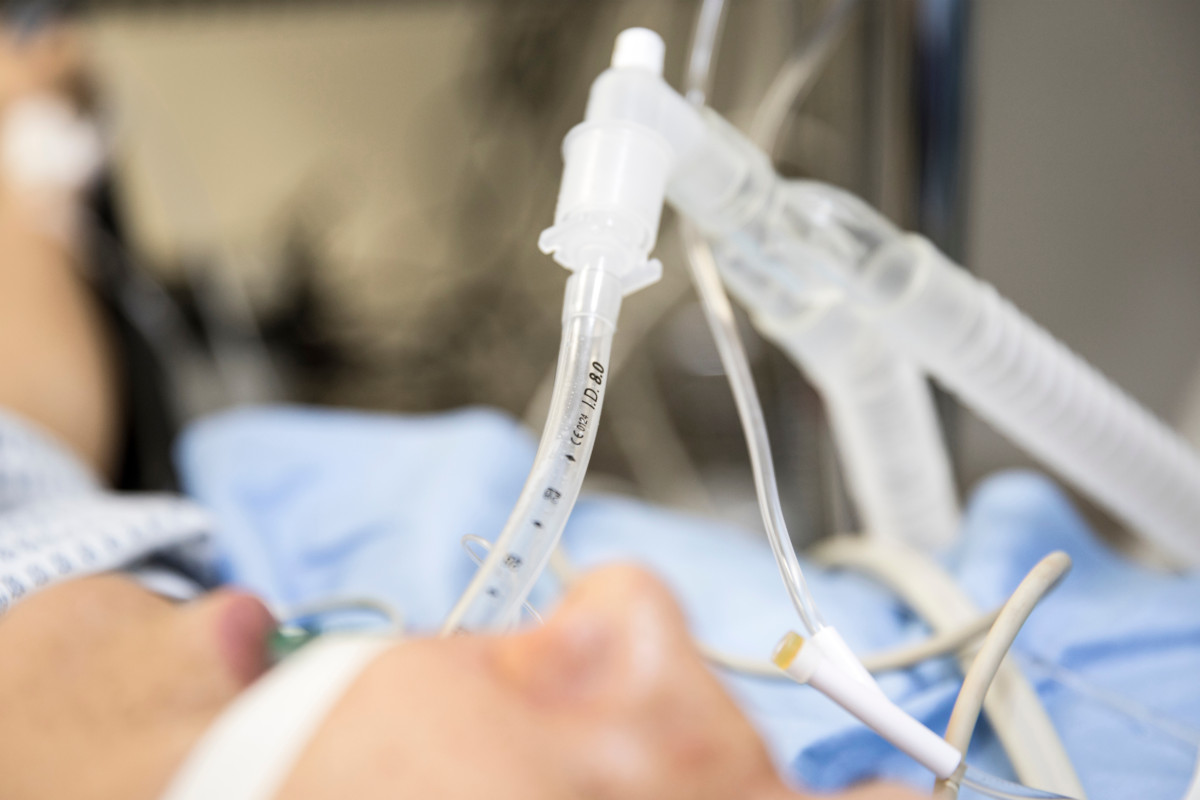
May 2019For patients on a breathing machine, doctors may secure the breathing tube in place using either adhesive tape or an endotracheal tube fastener. The ETTS Trial compared the securement technique of adhesive tape versus an endotracheal tube fastener for patients in the medical intensive care unit expected to require a breathing machine for more than 24 hours. Safety and efficacy of the two techniques were compared by evaluating the presence of lip ulcers, the tube becoming dislodged from the patient, ventilator-associated pneumonia, or facial skin tears. Results of the study showed that the use of the endotracheal tube fastener reduced the rate of lip ulcers, tube dislodgement, and skin tears compared to the use of adhesive tape. The findings suggest that using an endotracheal tube fastener will reduce the rate of these events, may improve patient safety, and may decrease the cost of care.
Background: The optimal securement method of endotracheal tubes is unknown but should prevent dislodgement while minimizing complications. The use of an endotracheal tube fastener might reduce complications among critically ill adults undergoing endotracheal intubation.
Methods: In this pragmatic, single-center, randomized trial, critically ill adults admitted to the medical intensive care unit (MICU) and expected to require invasive mechanical ventilation for greater than 24 h were randomized to adhesive tape or endotracheal tube fastener at the time of intubation. The primary endpoint was a composite of any of the following: presence of lip ulcer, endotracheal tube dislodgement (defined as moving at least 2 cm), ventilator-associated pneumonia, or facial skin tears anytime between randomization and the earlier of death or 48 h after extubation. Secondary endpoints included duration of mechanical ventilation and ICU and in-hospital mortality.
Results: Of 500 patients randomized over a 12-month period, 162 had a duration of mechanical ventilation less than 24 h and 40 had missing outcome data, leaving 153 evaluable patients randomized to tube fastener and 145 evaluable patients randomized to adhesive tape. Baseline characteristics were similar between the groups. The primary endpoint occurred 13 times in 12 (7.8%) patients in the tube fastener group and 30 times in 25 (17.2%) patients in the adhesive tape group (p = 0.014) for an overall incidence of 22.0 versus 52.6 per 1000 ventilator days, respectively (p = 0.020). Lip ulcers occurred in 4 (2.6%) versus 11 (7.3%) patients, or an incidence rate of 6.5 versus 19.5 per 1000 patient ventilator days (p = 0.053) in the fastener and tape groups, respectively. The endotracheal tube was dislodged 7 times in 6 (3.9%) patients in the tube fastener group and 16 times in 15 (10.3%) patients in the tape group (p = 0.03), reflecting incidences of 11.9 and 28.1 per 1000 ventilator days, respectively. Facial skin tears were similar between the groups. Mechanical ventilation duration and ICU and hospital mortality did not differ.
Conclusion: The use of the endotracheal tube fastener to secure the endotracheal tubes reduces the rate of a composite outcome that included lip ulcers, facial skin tears, or endotracheal tube dislodgement compared to adhesive tape.
Trial registration: ClinicalTrials.gov NCT03760510. Retrospectively registered on November 30, 2018.
Keywords: Critical care; Endotracheal tube; Endotracheal tube dislodgement; Facial skin tear; Intensive care units; Lip ulcer; Mechanical ventilation; Tube fastener.
Manuscript Title: “The effect of adhesive tape versus endotracheal tube fastener in critically ill adults: the endotracheal tube securement (ETTS) randomized controlled trial.”
Journal: Critical Care
PMID: 31064406
Review Articles
Posted onFluid Management in Sepsis.
May 2019Journal: Journal of Intensive Care Medicine
PMID: 29986619