




Journal: Critical Care
PMID: 31064406
Editorials
Posted onHow I manage a difficult intubation.
May 2019
Journal: Critical Care
PMID: 31096995
Editorials
Posted onBag-Mask Ventilation during Tracheal Intubation of Critically Ill Adults. Reply.
May 2019Journal: New England Journal of Medicine
PMID: 31216410
Editorials
Posted onVentilation before intubation: how to prevent hypoxaemia?
Apr 2019Journal: Lancet Respiratory Medicine
PMID: 30898521
Editorials
Posted onSodium bicarbonate for severe metabolic acidaemia.
Apr 2019Journal: Lancet
PMID: 30967212
Past Trials
Posted onPreVent Trial
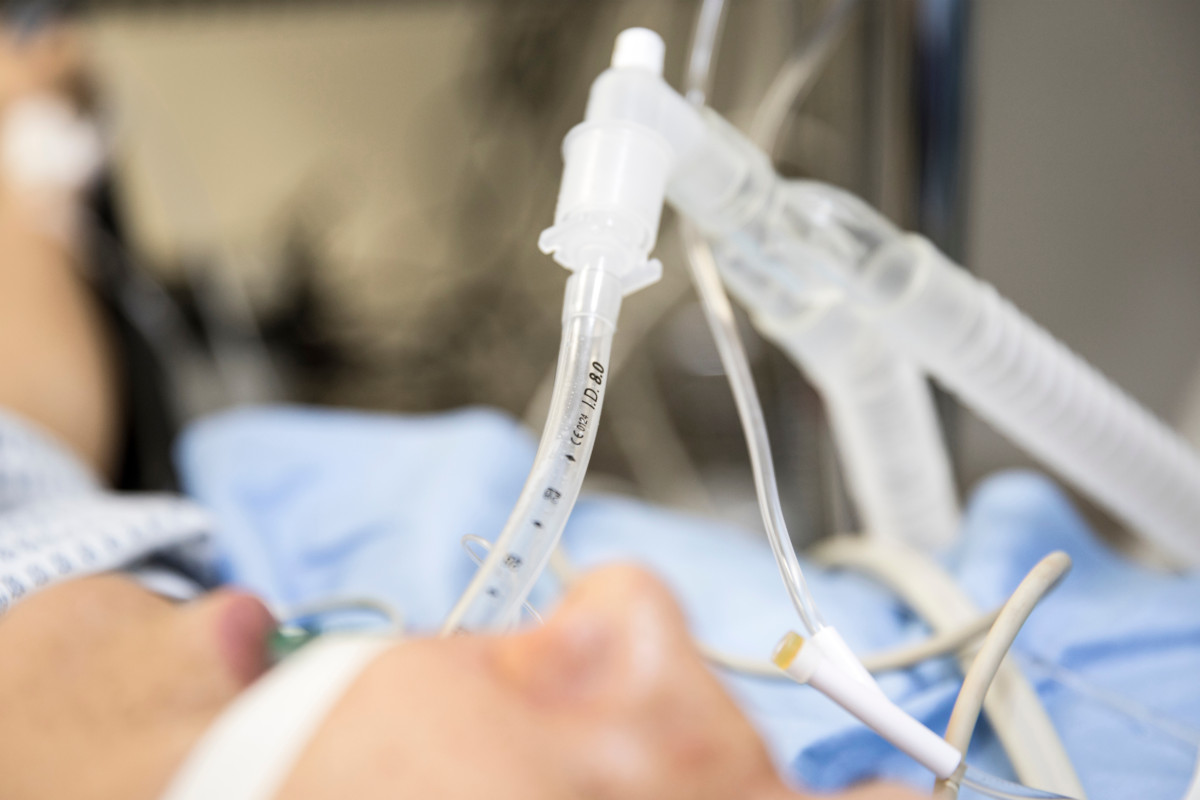
Feb 2019Low oxygen level is the most common complication that arises when a critically ill patient is being placed on a breathing machine. Whether providing oxygen and ventilation with a bag-mask device prior to placement of a breathing tube prevents low oxygen levels had been unknown. Among 401 patients in 7 intensive care units, the PreVent trial found that providing oxygen and ventilation with a bag-mask device was safe, maintained higher oxygen level and prevented dangerously low oxygen levels. These findings may improve the safety of breathing tube placement for many seriously ill adults.
Background: Hypoxemia is the most common complication during tracheal intubation of critically ill adults and may increase the risk of cardiac arrest and death. Whether positive-pressure ventilation with a bag-mask device (bag-mask ventilation) during tracheal intubation of critically ill adults prevents hypoxemia without increasing the risk of aspiration remains controversial.
Methods: In a multicenter, randomized trial conducted in seven intensive care units in the United States, we randomly assigned adults undergoing tracheal intubation to receive either ventilation with a bag-mask device or no ventilation between induction and laryngoscopy. The primary outcome was the lowest oxygen saturation observed during the interval between induction and 2 minutes after tracheal intubation. The secondary outcome was the incidence of severe hypoxemia, defined as an oxygen saturation of less than 80%.
Results: Among the 401 patients enrolled, the median lowest oxygen saturation was 96% (interquartile range, 87 to 99) in the bag-mask ventilation group and 93% (interquartile range, 81 to 99) in the no-ventilation group (P = 0.01). A total of 21 patients (10.9%) in the bag-mask ventilation group had severe hypoxemia, as compared with 45 patients (22.8%) in the no-ventilation group (relative risk, 0.48; 95% confidence interval [CI], 0.30 to 0.77). Operator-reported aspiration occurred during 2.5% of intubations in the bag-mask ventilation group and during 4.0% in the no-ventilation group (P = 0.41). The incidence of new opacity on chest radiography in the 48 hours after tracheal intubation was 16.4% and 14.8%, respectively (P = 0.73).
Conclusions: Among critically ill adults undergoing tracheal intubation, patients receiving bag-mask ventilation had higher oxygen saturations and a lower incidence of severe hypoxemia than those receiving no ventilation. (Funded by Vanderbilt Institute for Clinical and Translational Research and others; PreVent ClinicalTrials.gov number, NCT03026322.).
Manuscript Title: “Bag-Mask Ventilation during Tracheal Intubation of Critically Ill Adults.”
Journal: New England Journal of Medicine
PMID: 30779528
Featured PCCRG Publications
Posted on“Bag-Mask Ventilation during Tracheal Intubation of Critically Ill Adults.”
Feb 2019Journal: New England Journal of Medicine
PMID: 30779528
Review Articles
Posted onFluid Management in Acute Respiratory Distress Syndrome.
Feb 2019Journal: Seminars in Respiratory and Critical Care Medicine
PMID: 31060088
Results of Randomized Trials
Posted onBag-Mask Ventilation during Tracheal Intubation of Critically Ill Adults.
Feb 2019Journal: New England Journal of Medicine
PMID: 30779528
Review Articles
Posted onResuscitation fluids.
Dec 2018Journal: Current Opinion in Critical Care
PMID: 30247219
Secondary Analyses of Clinical Trial Results
Posted onRisk Factors for and Prediction of Hypoxemia during Tracheal Intubation of Critically Ill Adults.
Oct 2018Journal: Annals of the American Thoracic Society
PMID: 30109943
Research Methods
Posted onValidation of a Sequential Organ Failure Assessment Score using Electronic Health Record Data.
Sep 2018Journal: Journal of Medical Systems
PMID: 30218383
Secondary Analyses of Clinical Trial Results
Posted onHeterogeneity of Treatment Effect by Baseline Risk in a Trial of Balanced Crystalloids versus Saline.
Sep 2018Journal: American Journal of Respiratory and Critical Care Medicine
PMID: 29897785
Trial Statistical Analysis Plans
Posted onManual ventilation to prevent hypoxaemia during endotracheal intubation of critically ill adults: protocol and statistical analysis plan for a multicentre randomised trial.
Aug 2018Journal: BMJ Open
PMID: 30099400
Editorials
Posted onMaking the Medicine Go Down: Salt or Sugar?
Aug 2018Manuscript Title: “Making the Medicine Go Down: Salt or Sugar?”
Journal: Critical Care Medicine
PMID: 30004966
Letters to Editor
Posted onResponse.
Jun 2018Journal: Chest
PMID: 29884260
Letters to Editor
Posted onBalanced Crystalloids versus Saline in Critically Ill Adults.
May 2018Manuscript Title: “Balanced Crystalloids versus Saline in Critically Ill Adults.”
Journal: New England Journal of Medicine
PMID: 29768150
Letters to Editor
Posted onReply to Vincent and De Backer: We Do Not Appreciate SALT.
May 2018Manuscript Title: “Reply to Vincent and De Backer: We Do Not Appreciate SALT.”
Journal: American Journal of Respiratory and Critical Care Medicine
PMID: 29509507
All Publications
Posted on“A Multicenter Randomized Trial of a Checklist for Endotracheal Intubation of Critically Ill Adults.”
Apr 2018Journal: Chest
PMID: 28917549
Results of Randomized Trials
Posted onA Multicenter Randomized Trial of a Checklist for Endotracheal Intubation of Critically Ill Adults.
Apr 2018Journal: Chest
PMID: 28917549
Category: Clinical Trial Results (CHECK-Up Trial: Checklist)
Letters to Editor
Posted onResponse.
Apr 2018Journal: Chest
PMID: 29626955
Category: Letter to the Editor (CHECK-Up Trial: Checklist)
Results of Randomized Trials
Posted onBalanced Crystalloids versus Saline in Critically Ill Adults.
Mar 2018Journal: New England Journal of Medicine
PMID: 29485925
Category: Clinical Trial Results (SMART Trial)
Featured PCCRG Publications
Posted on“Balanced Crystalloids versus Saline in Noncritically Ill Adults.”
Mar 2018Journal: New England Journal of Medicine
PMID: 29485926
Featured PCCRG Publications
Posted on“Balanced Crystalloids versus Saline in Critically Ill Adults.”
Mar 2018Journal: New England Journal of Medicine
PMID: 29485925